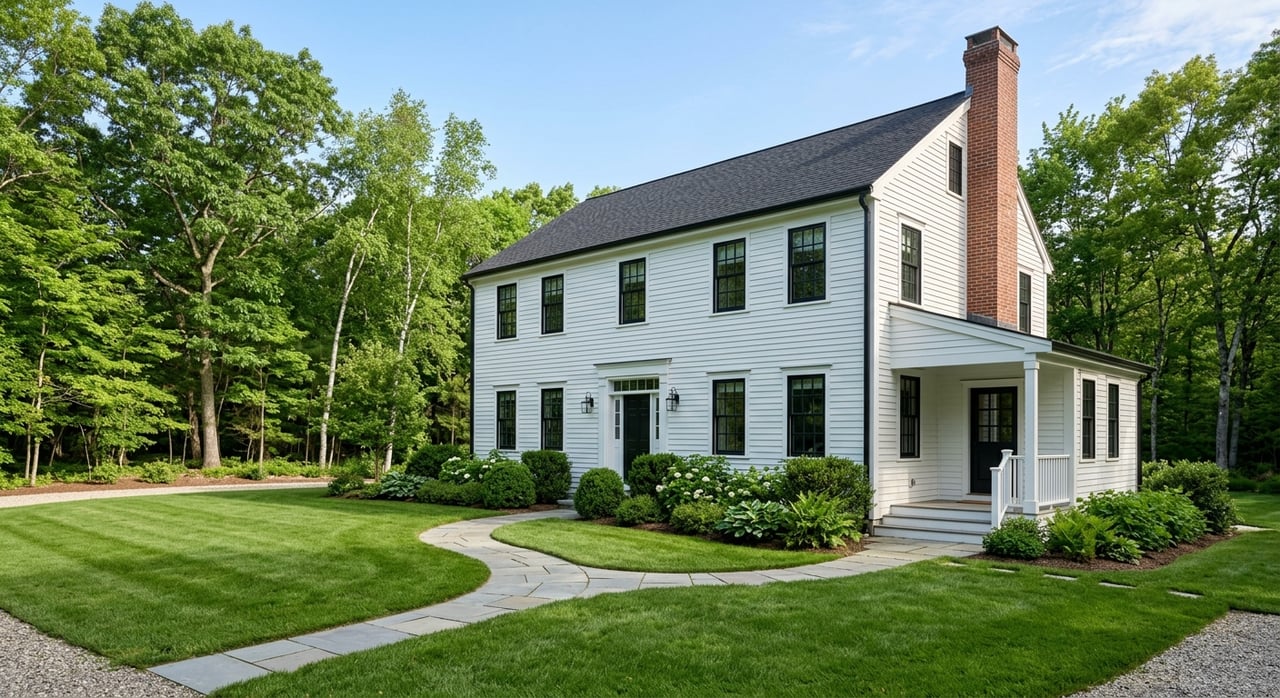
Carlisle Land, Septic, And Zoning: A Buyer’s Guide
May 14, 2026
May 14, 2026
If you are shopping for land or a home in Carlisle, the acreage can look exciting at first glance. But in this town, the number on the listing sheet is only the beginning. Because Carlisle relies on private wells and private septic systems, and because wetlands, conservation rules, and zoning shape what you can actually do with a property, smart due diligence matters early. This guide walks you through the key land, septic, and zoning issues to verify before you make an offer. Let’s dive in.
Carlisle is a low-density town where property ownership often comes with more site-specific review than buyers expect. The town has no municipal water supply, so homes, businesses, and government users rely on individual on-site wells. Carlisle also has no municipal sewerage, which means septic planning is central to both existing homes and vacant land.
The setting adds another layer. Carlisle describes itself as an area with extensive wetlands, a high water table, and ledge. That means a parcel that looks generous on paper may still have a limited building envelope once environmental and regulatory constraints are considered.
Conservation land is also a major part of the local landscape. The town includes large protected areas such as Greenough Land at 242 acres, Towle Land at 112 acres, and Davis Corridor and Malcolm Land at 156 acres. In some cases, a conservation restriction may permanently limit development rights, and that restriction stays with the property for future owners.
Before you focus on house plans, additions, or future improvements, confirm the parcel’s zoning district. In Carlisle, base residential zoning is intentionally large-lot.
In General Residence District A, the minimum lot area is 1 acre and the minimum frontage is 150 feet. In General Residence District B, the minimum lot area is 2 acres and the minimum frontage is 250 feet. Those numbers matter because frontage and lot shape can affect whether a lot is buildable or how a project can be laid out.
Carlisle’s use table allows one-family dwellings, agricultural use, and resident home occupation in residence districts. Other uses may need a special permit. For example, a resident’s small business may require additional review rather than being allowed as-of-right.
That distinction is important if you are buying with a future plan in mind. A property that works for basic residential use may not automatically support every accessory or business-related use you are considering.
A bigger parcel does not always mean simpler options. In Carlisle, larger properties may fall under rules for open-space development, conservation review, or special-permit processes.
A Conservation Cluster can be considered on parcels of 10 acres or more, and the required open space must be at least 30 percent of the parcel. A Residential Open Space Community requires at least 15 acres and at least 1.8 acres of open space per dwelling unit.
These rules can create opportunities, but they also change how land should be evaluated. If you are looking at a large parcel for a family compound, future division, or a redevelopment concept, you will want a clear understanding of what path the zoning bylaw actually allows.
The Planning Board serves as the special-permit authority for several important categories. These include common driveways, conservation clusters, senior residential open space community developments, personal wireless facilities, and accessory apartments.
That means a parcel’s potential may depend not only on acreage, but also on whether your intended use is allowed by right or requires discretionary approval. Timing, complexity, and cost can all change based on that answer.
Accessory dwelling units are specifically addressed in Carlisle’s zoning bylaw. The bylaw follows state ADU law, but it also includes local design and use rules.
A Protected Use ADU cannot be used as a short-term rental. The bylaw also requires the ADU to remain subordinate in design, parking, and driveway treatment. If you are buying with plans for multigenerational living or guest space, it is important to confirm that your concept matches the bylaw.
Carlisle does have an MBTA Communities overlay, but it is limited to one parcel at 1-15, 17, 19, 21, and 23 Kay’s Walk, commonly known as Woodward Village. Within that overlay, multi-family housing is allowed as-of-right.
For most buyers, this means the overlay will not apply to the broader Carlisle market. It is a reminder that one zoning headline rarely tells the whole story on a town-wide basis.
Septic is one of the most important parts of buying in Carlisle. Massachusetts Title 5 sets the baseline, but Carlisle’s Board of Health says its own supplementary sewage-disposal regulations are stricter because of local wetland, groundwater, and bedrock conditions.
The town makes clear that Title 5 is only a minimum standard. Because Carlisle has no town water backup and relies on on-site systems and private wells, the local review process is especially important.
For new construction, Carlisle requires at least two deep observation holes and two percolation tests in both the primary and reserve leaching areas. If you are considering land or teardown-style opportunities, this is a key part of feasibility.
Carlisle’s 2024 supplementary regulations use a higher design flow than Title 5 for many homes. For three-bedroom homes, the town uses 165 gallons per day per bedroom, with lower per-bedroom rates only at higher bedroom counts.
That may affect system sizing, reserve area planning, and the practical fit between house size and site conditions. It is one more reason why buyers should not assume a lot can support the exact home plan they have in mind.
Carlisle requires annual septic tank pump-out under its local regulations. For some multi-dwelling projects, the town also requires a water meter in each unit and annual reporting to the Board of Health.
Garbage grinders may be prohibited in some multi-dwelling approvals and can also be restricted by deed. These details may sound small at first, but they can affect daily use, maintenance planning, and future ownership costs.
If you are buying an existing home, ask for septic and water documents early. In Carlisle, the Board of Health says a Title 5 inspection must be completed to sell the home, and the report is kept on file.
A Title 5 inspection report is good for two years from the inspection date. The town may extend that to three years if the system has been pumped annually.
State guidance says weather-related sale exceptions are limited. So if a property is headed to market or already under consideration, timing should be reviewed carefully.
Carlisle also requires a standard water test confirming the absence of coliform before sale. Since there is no municipal water system, private well quality is an essential part of the transaction.
The Board of Health also recommends pumping the septic system at least every two years. For buyers, service records can help you understand how consistently the system has been maintained.
Because every Carlisle property depends on a private well, well records deserve the same attention as septic files. The town’s 2026 water-supply regulations require a Board of Health permit before a private well is installed or modified.
A well completion report and a satisfactory water-quality test are required for a building permit. If you are buying land for new construction, these are not side issues. They are core feasibility items.
Carlisle also has a separate irrigation-well policy. That policy includes a 15 percent estimated recharge limit and a 100-foot minimum deep well standard for irrigation wells.
If a property has extensive grounds or you are planning future landscape improvements, it is worth understanding whether irrigation well rules could affect your plans.
One of the most useful ways to think about Carlisle property is this: gross acreage is only the starting point. What really matters is the usable building area after the rules are applied.
The practical build envelope may be narrowed by:
This is why a five-acre parcel may not function the way a buyer expects, while a smaller parcel with cleaner conditions may be easier to use.
Before you write an offer on land or a home with future improvement plans, verify the basics with care. A thorough review can help you avoid surprises after you are under contract.
These are not just technical questions. They are the questions that help you understand whether a property truly matches your goals.
Carlisle can be a wonderful place to buy, but it rewards careful, local due diligence. Properties here often involve more than square footage and lot size. They involve systems, approvals, site conditions, and long-term practicality.
When you have experienced guidance, it is easier to ask the right questions early, interpret the town rules in context, and focus on homes or land that fit how you actually want to live. If you are considering a purchase in Carlisle or another Middlesex County town, Colleen Murphy can help you approach the process with clarity and confidence.
The St. Martin Team is a team of dedicated and well-respected Realtors®️ and they welcome the opportunity to meet with you and count you among our lifelong clients. Contact them today!